Role of Security in Ecommerce: Safeguarding UK B2B Stores

Protecting a Magento store against evolving cyber threats demands more than just basic safeguards. Ecommerce directors across the United Kingdom face real challenges as attackers exploit vulnerabilities like ‘SessionReaper’, which allow unauthorised access and control of critical business infrastructure. With the UK government’s cyber security codes of practice setting clear expectations and PCI Security Standards offering layered defence strategies, this guide provides practical insights into digital protection essentials, common risks, and compliance solutions tailored to the UK’s B2B retail sector.
Table of Contents
- Defining Security In Ecommerce Context
- Key Threats Facing Magento B2B Stores
- Essential Security Features And Practices
- Legal Compliance: Gdpr And Pci Dss Duties
- Risks Of Poor Security And Recovery Steps
Key Takeaways
| Point | Details |
|---|---|
| Ecommerce Security Framework | A comprehensive approach is essential for protecting digital transactions and customer data in the UK’s ecommerce landscape. |
| Proactive Threat Management | Implement regular security audits and vulnerability assessments to identify and mitigate potential threats effectively. |
| Legal Compliance Importance | Adhering to GDPR and PCI DSS standards is crucial for customer trust and avoiding significant penalties. |
| Consequences of Poor Security | Inadequate security can lead to financial losses, reputational damage, and legal implications; robust incident response plans are vital for recovery. |
Defining Security in Ecommerce Context
Ecommerce security represents a comprehensive strategic approach to protecting digital transactions, customer data, and online business infrastructure from potential cyber threats. In the United Kingdom’s rapidly evolving digital marketplace, understanding the nuanced landscape of digital protection becomes paramount for businesses seeking sustainable growth.
The fundamental framework of ecommerce security encompasses multiple critical dimensions:
- Technical Infrastructure Protection: Safeguarding servers, networks, and system architectures
- Data Encryption: Securing sensitive customer and transaction information
- Payment Gateway Security: Ensuring secure financial transaction processes
- User Authentication: Implementing robust identity verification mechanisms
- Vulnerability Management: Proactively identifying and addressing potential system weaknesses
The UK government provides comprehensive guidance through cyber security codes of practice, which establish clear baseline expectations for organisational resilience against digital threats. These guidelines promote a risk-based approach to protecting technological ecosystems, emphasising prevention and strategic response strategies.

Beyond technical measures, effective ecommerce security requires a holistic perspective that integrates technological solutions with robust organisational protocols. This means developing comprehensive strategies that address human factors, technological vulnerabilities, and evolving threat landscapes simultaneously.
Here is a comparison of how technical and organisational security measures each contribute to comprehensive ecommerce protection:
| Security Dimension | Technical Measures | Organisational Protocols |
|---|---|---|
| Infrastructure Protection | Firewalls, intrusion systems | Policy enforcement, audits |
| Data Security | Encryption standards | Staff training, access controls |
| Threat Detection | Automated monitoring tools | Incident response planning |
| Resilience & Adaptation | Regular software updates | Security policies, reporting |
Ecommerce security is not a destination, but a continuous journey of adaptation and vigilance.
Pro tip: Regularly conduct comprehensive security audits and stay updated on emerging cyber threat patterns to maintain robust digital defence mechanisms.
Key Threats Facing Magento B2B Stores
Magento B2B ecommerce stores face a complex and evolving landscape of cybersecurity threats that can compromise their digital infrastructure, customer data, and overall business operations. Understanding these potential vulnerabilities is critical for maintaining robust digital defence mechanisms and protecting sensitive business assets.
The most prevalent threats targeting Magento B2B stores include:
- Authentication Bypass Vulnerabilities: Techniques allowing unauthorized system access
- Session Hijacking: Intercepting and exploiting user authentication credentials
- Web Shell Deployment: Malicious scripts enabling remote server control
- Data Exfiltration: Unauthorised extraction of sensitive business and customer information
- Supply Chain Attacks: Compromising third-party integrations and extensions
Critical Magento vulnerability incidents have recently exposed significant risks, such as the ‘SessionReaper’ exploit, which allows threat actors to bypass authentication mechanisms and gain root-level server control. These sophisticated attacks demonstrate the urgent need for proactive security management in ecommerce platforms.
According to the UK National Risk Register, cyber threats represent a major risk to businesses, with ecommerce platforms being particularly vulnerable. These threats range from sophisticated phishing campaigns to advanced persistent threats designed to disrupt operations and compromise critical infrastructure.
Cybersecurity in Magento B2B stores is not just about technology, but about creating a comprehensive risk management strategy.
Pro tip: Implement a rigorous patch management process and conduct regular security audits to identify and mitigate potential vulnerabilities before they can be exploited.
Essential Security Features and Practices
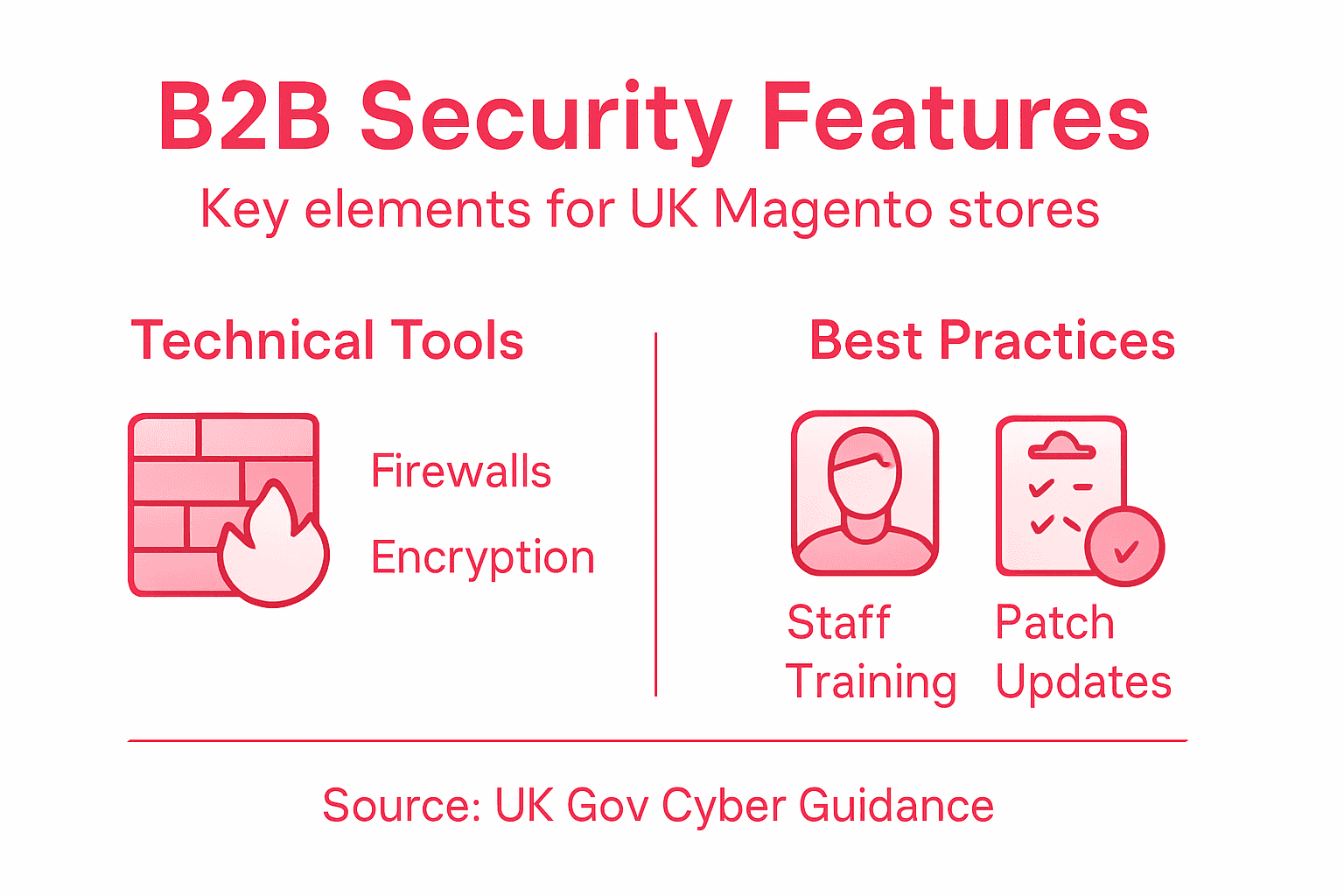
Securing a Magento B2B ecommerce platform requires a comprehensive, multi-layered approach that integrates technological solutions, robust protocols, and continuous monitoring. Cybersecurity is not a one-time implementation but an ongoing strategic commitment that evolves with emerging digital threats.
Key essential security features for Magento B2B stores include:
- Multi-Factor Authentication: Implementing advanced login verification
- Encryption Protocols: Protecting data transmission and storage
- Regular Security Patching: Maintaining up-to-date system defences
- Network Segmentation: Isolating critical system components
- Advanced Intrusion Detection Systems: Monitoring and preventing unauthorized access
PCI Security Standards provide comprehensive guidelines for securing ecommerce platforms, emphasising a layered security approach that protects cardholder data, ensures strong authentication, and maintains robust network security. These standards offer a critical framework for B2B operations seeking to enhance their digital defence mechanisms.
Implementing these security practices requires a holistic strategy that goes beyond technical configurations. This involves creating a security-first culture, training staff on potential risks, and developing incident response protocols that can quickly mitigate potential breaches. Regular security audits, vulnerability assessments, and penetration testing become essential components of a proactive defence strategy.
Security is not a product, but a continuous process of adaptation and vigilance.
Pro tip: Develop a comprehensive security policy that includes regular staff training, automated patch management, and clear incident response procedures.
Legal Compliance: GDPR and PCI DSS Duties
Legal compliance in Magento B2B ecommerce is a complex landscape that demands rigorous adherence to data protection and payment security regulations. UK businesses must navigate multiple legislative frameworks to ensure comprehensive protection of customer information and financial transactions.
Key compliance requirements include:
- Data Minimisation: Collecting only essential customer information
- Explicit Consent: Obtaining clear permission for data processing
- Secure Data Storage: Implementing robust encryption protocols
- Transparent Reporting: Maintaining detailed documentation of data handling
- Regular Compliance Audits: Conducting systematic legal and security reviews
UK Data Protection Guidelines mandate that ecommerce businesses implement comprehensive policies ensuring transparency, accountability, and minimal data collection. This includes appointing Data Protection Officers, conducting impact assessments, and establishing clear frameworks for customer data rights.
PCI DSS compliance represents another critical dimension of legal obligations. These standards require organisations to implement stringent controls for payment card data, including robust access management, encryption protocols, and systematic vulnerability assessments. Payment Security Standards provide a comprehensive framework that helps businesses mitigate fraud risks and maintain contractual obligations with payment processors.
Legal compliance is not a checkbox, but a continuous commitment to protecting customer trust.
Pro tip: Develop a cross-functional compliance team that integrates legal, IT, and security professionals to ensure comprehensive and proactive regulatory adherence.
Risks of Poor Security and Recovery Steps
Poor cybersecurity in Magento B2B ecommerce can lead to catastrophic consequences that extend far beyond immediate financial losses. Data breaches and security vulnerabilities can irreparably damage customer trust, brand reputation, and organisational sustainability, creating long-term strategic challenges for UK businesses.
The most significant risks associated with inadequate security include:
- Financial Losses: Potential fraud and transaction disruptions
- Reputational Damage: Erosion of customer confidence
- Legal Penalties: Substantial fines for non-compliance
- Operational Disruption: Extended system downtime
- Intellectual Property Theft: Compromise of sensitive business information
UK Cyber Strategy Research highlights the substantial economic impact of weak cybersecurity, demonstrating that high-profile breaches reveal systemic vulnerabilities threatening national economic interests. These incidents underscore the critical need for comprehensive, proactive security strategies.
Recovery from a security incident requires a structured, multi-dimensional approach. Organisations must develop robust incident response plans, conduct thorough forensic investigations, implement immediate containment strategies, and rebuild systems with enhanced security protocols. This process involves collaboration between IT security teams, legal departments, and external cybersecurity experts to ensure comprehensive remediation.
Below is a summary of the consequences of poor cybersecurity and the key recovery steps businesses must take:
| Consequence | Description | Recovery Step |
|---|---|---|
| Financial Loss | Fraud, payment disruption | Activate insurance protocols |
| Reputation Damage | Loss of customer trust | Launch PR and client notifications |
| Legal Penalties | Fines for non-compliance | Improve regulatory compliance |
| Operations Disruption | Downtime, interrupted sales | Restore services, assess impact |
| IP Theft | Loss of business secrets | Conduct forensic investigation |
Security is not an expense, but an essential investment in business continuity and customer trust.
Pro tip: Create a detailed incident response playbook with predefined roles, communication protocols, and step-by-step recovery procedures to minimise potential damage during a security breach.
Strengthen Your Magento B2B Store Security With Expert Support
Ecommerce security is a continuous journey that demands vigilance and a holistic strategy to safeguard your digital assets, customer data, and payment processes. If you are concerned about vulnerabilities like session hijacking, authentication bypass, or data exfiltration in your Magento B2B store, you are not alone. These threats can cause severe financial loss, reputational damage, and legal penalties if not proactively managed. Embracing comprehensive solutions including multi-factor authentication, encryption, and proactive malware monitoring is vital for thriving in today’s competitive UK ecommerce landscape.

Take control now by partnering with Big Eye Deers, a UK-based ecommerce agency specialising in Magento and Adobe Commerce platforms. We offer advanced B2B ecommerce builds, custom integrations, and security-first support that includes Sansec-powered threat detection to maintain PCI compliance and prevent supply chain attacks. Discover how our design and performance expertise supports long-term commercial growth while ensuring your store’s resilience. Visit our Magento ecommerce services page to learn more and protect your business today.
Frequently Asked Questions
What are the key components of ecommerce security for B2B stores?
Ecommerce security for B2B stores encompasses several critical components, including technical infrastructure protection, data encryption, payment gateway security, user authentication, and vulnerability management. These elements work together to safeguard sensitive information and ensure secure transactions.
How can I protect my Magento B2B store from cyber threats?
To protect your Magento B2B store from cyber threats, implement multi-factor authentication, use encryption protocols, ensure regular security patching, maintain network segmentation, and deploy advanced intrusion detection systems. Regular security audits and training for staff are also essential.
What are the implications of non-compliance with data protection regulations for ecommerce businesses?
Non-compliance with data protection regulations can lead to severe consequences, including hefty fines, reputational damage, and legal penalties. Businesses may also face operational disruptions and loss of customer trust, impacting long-term sustainability.
What steps should be taken after a cybersecurity incident in an ecommerce business?
After a cybersecurity incident, businesses should activate their incident response plans, conduct a thorough forensic investigation, implement containment strategies, and ensure to rebuild systems with enhanced security protocols. Collaboration with IT security teams, legal departments, and external cybersecurity experts is crucial for effective recovery.
Recommended



Adobe Commerce (Magento)
Formerly known as Magento, Adobe Commerce is built for complex catalogues, integrations, and long term growth. We design and develop stable, scalable stores that support demanding eCommerce requirements, including multi-store setups, complex pricing, and Hyva based performance improvements.

Bespoke Build
We design and build custom eCommerce platforms for businesses with complex workflows, integrations, or non standard requirements. Built from scratch around your business needs using Laravel and modern architectures.

Working with brands across the UK from our offices in Cardiff and Exeter, you deal directly with a senior team of designers and developers specialising in Shopify, Magento, WordPress and bespoke eCommerce platforms.
We focus on commercial outcomes. Better conversion rates, strong SEO foundations and eCommerce platforms that continue to improve long after launch.