Definition of Ecommerce Platforms: Impact on UK Retail

Managing a mid-sized online store in the United Kingdom means choosing technology that does far more than handle basic sales. The right platform delivers comprehensive software infrastructure covering product catalogues, secure payment processes, and seamless customer interactions. As retail competition pushes digital standards higher, this overview clarifies how platforms like Magento and Shopify are reshaping performance and security for British e-commerce teams ready to grow.
Table of Contents
- What Are Ecommerce Platforms? Core Definition
- Types of Ecommerce Platforms Explained
- Essential Features and Functions in Practice
- Compliance, Security and UK Legal Standards
- Risks, Common Pitfalls and Cost Implications
Key Takeaways
| Point | Details |
|---|---|
| E-commerce platforms provide comprehensive solutions | These platforms enable businesses to create online stores, manage products, process transactions, and enhance customer interactions across digital channels. |
| Types of platforms cater to different needs | Businesses should choose from hosted, open-source, marketplace, or niche-specific platforms based on their technical needs and desired level of control. |
| Robust features drive customer satisfaction and engagement | Key functionalities include mobile responsiveness, secure payment options, and personalised recommendations, all crucial for improving user experience and sales. |
| Compliance and security are paramount | Legal obligations like data protection and cybersecurity regulations must be integrated into operations to mitigate risks and protect both businesses and consumers. |
What Are Ecommerce Platforms? Core Definition
E-commerce platforms are sophisticated digital systems that transform how businesses sell products and services online. These technological solutions enable companies to create virtual storefronts, manage product catalogues, process payments, and interact with customers across digital channels. At their core, e-commerce platforms provide a comprehensive software infrastructure that supports the entire online retail experience.
In the United Kingdom’s rapidly evolving retail landscape, these platforms serve as critical technological backbones for businesses of all sizes. Digital marketplace solutions range from simple website builders to complex enterprise-level systems that integrate multiple business functions. They typically include essential features such as:
- Website hosting capabilities
- Product listing management
- Integrated shopping cart functionality
- Secure payment gateway processing
- Customer account and order management
- Inventory tracking systems
- Mobile commerce compatibility
The technological sophistication of these platforms allows retailers to transcend traditional geographical limitations. By creating digital storefronts, businesses can reach customers nationwide and even internationally, transforming how commercial transactions occur in the digital age. Electronic transaction systems now enable seamless interactions between businesses and consumers, fundamentally reshaping retail strategies.
Pro tip: When selecting an e-commerce platform, prioritise scalability and integration capabilities to ensure your digital infrastructure can grow alongside your business.
Types of Ecommerce Platforms Explained
E-commerce platforms in the United Kingdom are not a one-size-fits-all solution, but rather a diverse ecosystem of technological approaches designed to meet varying business needs. Ecommerce platform categories have evolved to provide retailers with multiple strategic options for establishing and growing their online presence.
The primary types of e-commerce platforms can be broadly classified into four distinct categories:
- Hosted All-in-One Platforms
- Turnkey solutions like Shopify
- Minimal technical expertise required
- Quick deployment and setup
- Integrated payment and hosting
- Open-Source Platforms
- Extensive customisation capabilities
- Examples include WooCommerce and Magento
- Requires advanced technical knowledge
- Complete control over design and functionality
- Marketplace Platforms
- Sell through established online marketplaces
- Instant access to large customer bases
- Limited brand control
- Includes Amazon, eBay, Etsy
- Niche Specific Platforms
- Tailored for specific industry verticals
- Specialised features for unique business models
- Enhanced industry-specific functionality
The complexity of online transaction systems means UK retailers often adopt hybrid approaches. By combining platform types, businesses can optimise their digital strategy, balancing ease of use with sophisticated technical requirements that support both business-to-business (B2B) and business-to-consumer (B2C) transactions.
Here is a summary comparing the main types of e-commerce platforms available to UK businesses:
| Platform Type | Technical Skill Needed | Customisation Potential | Brand Control Level |
|---|---|---|---|
| Hosted All-in-One | Minimal | Limited to built-in features | Moderate |
| Open-Source | Advanced | Extensive with development | Full |
| Marketplace | None | Very limited | Low |
| Niche Specific | Basic to Moderate | Targeted for specific needs | High within niche |
Pro tip: Conduct a comprehensive audit of your business requirements before selecting an e-commerce platform, considering scalability, integration potential, and long-term growth objectives.
Essential Features and Functions in Practice
Successful e-commerce platforms in the United Kingdom are distinguished by their comprehensive feature sets that go far beyond simple transactional capabilities. Ecommerce website essentials have evolved to create holistic digital experiences that meet increasingly sophisticated consumer expectations.

The core functional requirements for modern e-commerce platforms can be categorised into several critical domains:
User Experience Features
- Mobile-responsive design
- Intuitive navigation interfaces
- Fast page loading speeds
- High-quality product imagery
- Detailed product descriptions
Technical Infrastructure Elements
- Secure payment gateway integrations
- Multi-channel selling capabilities
- Real-time inventory management
- Advanced search functionality
- Robust data analytics tools
Customer Engagement Capabilities
- Personalised product recommendations
- AI-driven user experience customisation
- Seamless checkout processes
- Customer account management
- Marketing automation tools
Platform performance features are increasingly complex, requiring retailers to implement sophisticated technological solutions that balance technical performance with user-friendly design. These integrated systems must support multiple sales channels, provide granular data insights, and maintain rigorous security standards.
Modern UK retailers demand platforms that offer not just transactional capabilities, but comprehensive ecosystem management. This means supporting everything from initial customer engagement through to post-purchase support, with seamless integrations across marketing, inventory, and customer relationship management systems.
The table below highlights how essential e-commerce platform features drive business outcomes:
| Feature Category | Example Function | Business Impact |
|---|---|---|
| User Experience | Mobile responsiveness | Increases customer retention |
| Technical Infrastructure | Real-time inventory sync | Reduces stockouts and order issues |
| Customer Engagement | Personalised recommendations | Improves conversion and average spend |
| Security & Compliance | Data protection controls | Minimises legal and reputational risks |
Pro tip: Conduct periodic feature audits of your e-commerce platform, comparing your current capabilities against emerging market standards to ensure continuous technological relevance.
Compliance, Security and UK Legal Standards
E-commerce platforms operating in the United Kingdom must navigate a complex landscape of legal and regulatory requirements that demand rigorous attention to detail. UK digital business regulations encompass a comprehensive framework designed to protect both businesses and consumers in the digital marketplace.
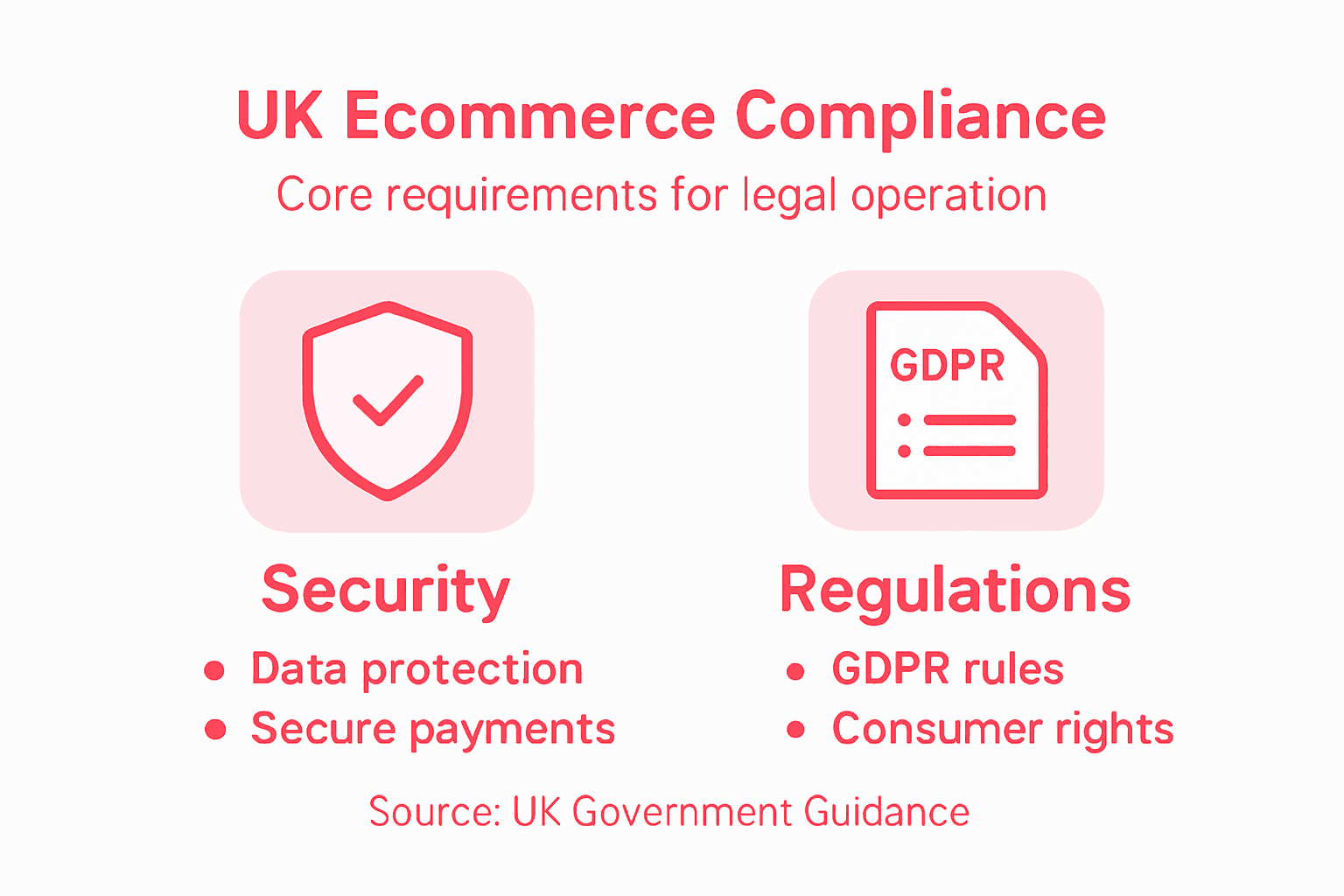
The critical legal domains for UK e-commerce platforms include:
Regulatory Compliance Areas
- Electronic Commerce Regulations 2002
- Data Protection Act 2018 (UK GDPR)
- Consumer Protection Laws
- Platform-to-Business Regulation
- Cyber Security Regulations
Key Legal Obligations
- Transparent pre-contractual information disclosure
- Strict data privacy protection
- Fair business practice standards
- Cybersecurity infrastructure requirements
- Regular compliance auditing
Data Protection Requirements
- Personal data processing controls
- Mandatory breach notification protocols
- Consent management systems
- Data minimisation principles
- Individual rights protection mechanisms
Cybersecurity legal frameworks are becoming increasingly sophisticated, with upcoming legislation like the Cyber Security Resilience Bill signalling a more stringent approach to digital platform security. The National Cyber Security Centre provides comprehensive guidance to help businesses maintain robust defensive strategies.
The regulatory landscape demands that UK e-commerce platforms treat compliance not as a checkbox exercise, but as an integral part of their operational strategy. This means continuously updating security protocols, maintaining transparent customer communications, and proactively adapting to evolving legal requirements.
Pro tip: Engage a specialised legal consultant who understands e-commerce regulations to conduct an annual compliance review of your digital platform’s legal and security frameworks.
Risks, Common Pitfalls and Cost Implications
E-commerce platforms in the United Kingdom face an increasingly complex landscape of operational risks and financial challenges. E-commerce business challenges in 2025 demand sophisticated risk management strategies that address multiple interconnected threats to profitability and sustainability.
The primary risk categories for UK e-commerce businesses include:
Financial and Operational Risks
- Tariff volatility impacting cost structures
- Supply chain disruption increasing expenses
- Rising customer acquisition costs
- Import duty fluctuations
- Extended manufacturing lead times
Fraud and Security Risks
- AI-powered synthetic identity threats
- Remote access attack vulnerabilities
- Loyalty points fraud mechanisms
- Complex cybersecurity compliance requirements
- Advanced fraudulent transaction techniques
Cost Management Challenges
- Investment in fraud prevention technologies
- Regulatory compliance expenditure
- Thin profit margin pressures
- Technological infrastructure upgrades
- Identity verification system implementations
E-commerce fraud prevention strategies have become increasingly sophisticated, requiring UK retailers to balance robust security measures with operational efficiency. Small to mid-sized businesses particularly struggle with the escalating costs of maintaining secure and compliant digital platforms.
The evolving digital marketplace demands continuous investment in risk mitigation technologies, with businesses needing to develop agile approaches to managing both technological and financial challenges. This requires a proactive stance, integrating advanced security solutions while maintaining cost-effective operational models.
Pro tip: Develop a comprehensive risk management framework that includes quarterly technology assessments and predictive cost modeling to stay ahead of emerging digital commerce challenges.
Unlock the Full Potential of Your Ecommerce Platform Today
Navigating the complexities of e-commerce platforms in the UK retail landscape requires more than basic solutions. From managing multi-store setups and ERP integrations to ensuring compliance with evolving security standards, the challenges are significant. Big Eye Deers specialises in addressing these pain points by designing and supporting bespoke Magento and Shopify ecommerce platforms that prioritise UX, performance, and scalability. With over 17 years of expertise, we help you overcome risks like supply chain disruptions and security threats while enhancing conversion through tools such as Klevu search and Klaviyo marketing automation.

Elevate your online retail experience by partnering with a UK-based ecommerce agency that truly understands the demands of today’s digital marketplace. Explore how our customisable ecommerce solutions can support your long-term growth by visiting Big Eye Deers. Learn more about our specialised Magento Open Source and Adobe Commerce builds and discover tailored strategies designed to future-proof your business in the ever-evolving ecommerce environment.
Frequently Asked Questions
What is an e-commerce platform?
E-commerce platforms are digital systems that enable businesses to sell products and services online, providing functionalities such as website creation, payment processing, and customer management.
What are the different types of e-commerce platforms available?
E-commerce platforms can be categorised into four main types: Hosted All-in-One Platforms, Open-Source Platforms, Marketplace Platforms, and Niche Specific Platforms, each offering varying levels of customisation and control.
What essential features should an e-commerce platform have?
An effective e-commerce platform should include features such as mobile-responsive design, secure payment gateway integrations, real-time inventory management, and customer engagement capabilities like personalised product recommendations.
How do compliance and security regulations affect e-commerce platforms?
E-commerce platforms must adhere to numerous legal and regulatory requirements, including data protection laws and cybersecurity regulations, which are critical for maintaining consumer trust and protecting sensitive information.
Recommended
- Enterprise Ecommerce Solutions: Powering UK Retail Growth
- 7 Types of Ecommerce Platforms for Growing UK Retail Brands
- Why Choose Custom Ecommerce for UK Retail Brands
- Why Invest in Custom Websites for Ecommerce Growth
- UK Delivery for Hair Extensions: Fast, Fuss-Free Solutions
- Why Choose Plant-Based Supplements for UK Female Athletes – Interval



Adobe Commerce (Magento)
Formerly known as Magento, Adobe Commerce is built for complex catalogues, integrations, and long term growth. We design and develop stable, scalable stores that support demanding eCommerce requirements, including multi-store setups, complex pricing, and Hyva based performance improvements.

Bespoke Build
We design and build custom eCommerce platforms for businesses with complex workflows, integrations, or non standard requirements. Built from scratch around your business needs using Laravel and modern architectures.
Working with brands across the UK from our offices in Cardiff and Exeter, you deal directly with a senior team of designers and developers specialising in Shopify, Magento, WordPress and bespoke eCommerce platforms.
We focus on commercial outcomes. Better conversion rates, strong SEO foundations and eCommerce platforms that continue to improve long after launch.