Why Use Professional Web Design for Ecommerce Success

Growing a successful retail brand in Cardiff or Exeter means every online interaction counts. Many ecommerce managers find that standard website themes on Magento or Shopify can limit both user experience and sales potential. Professional web design rooted in user-centred principles and technical precision is your edge in a competitive digital market. This guide highlights the core pillars of effective web design and shows how each decision shapes trust, engagement, and overall business growth.
Table of Contents
- Professional Web Design – Core Principles
- Types Of Ecommerce Web Design Services
- Impact Of Design On User Experience And Trust
- Driving Conversion Rates And Online Sales
- Ensuring Security And Compliance For Brands
- Comparing Diy Vs Professional Solutions
Key Takeaways
| Point | Details |
|---|---|
| User-Centred Design | Prioritising user experience through intuitive navigation increases engagement and retention. |
| Responsive Functionality | Ensuring consistent site performance across devices broadens audience reach and enhances accessibility. |
| Technical Precision | Optimising site performance positively impacts search rankings and conversion rates, making technical expertise essential. |
| Security and Compliance | Adhering to legal regulations and implementing robust security measures builds consumer trust and protects organisational reputation. |
Professional web design – core principles
Professional web design transcends aesthetic appeal and represents a strategic approach to creating digital experiences that drive user engagement and business outcomes. At its core, web design involves crafting intuitive, accessible interfaces that seamlessly connect users with digital content. Design principles for digital platforms emphasise creating websites that are not just visually compelling but functionally effective.
The fundamental pillars of professional web design include user-centred design, visual hierarchy, and responsive functionality. User experience remains paramount, requiring designers to understand user behaviours, anticipate interactions, and create pathways that guide visitors effortlessly through digital environments. Visual hierarchy helps structure information, ensuring critical elements receive appropriate visual weight and prominence. Responsive design guarantees consistent performance across multiple devices, from desktop computers to mobile smartphones.
Effective web design also demands technical precision and strategic thinking. Designers must balance aesthetic considerations with performance metrics, understanding how design choices impact loading speeds, user retention, and conversion rates. Accessibility emerges as a critical principle, ensuring digital experiences are inclusive and navigable for users with diverse abilities. This approach requires thoughtful colour selections, clear typography, and intuitive navigation structures that accommodate different user needs.
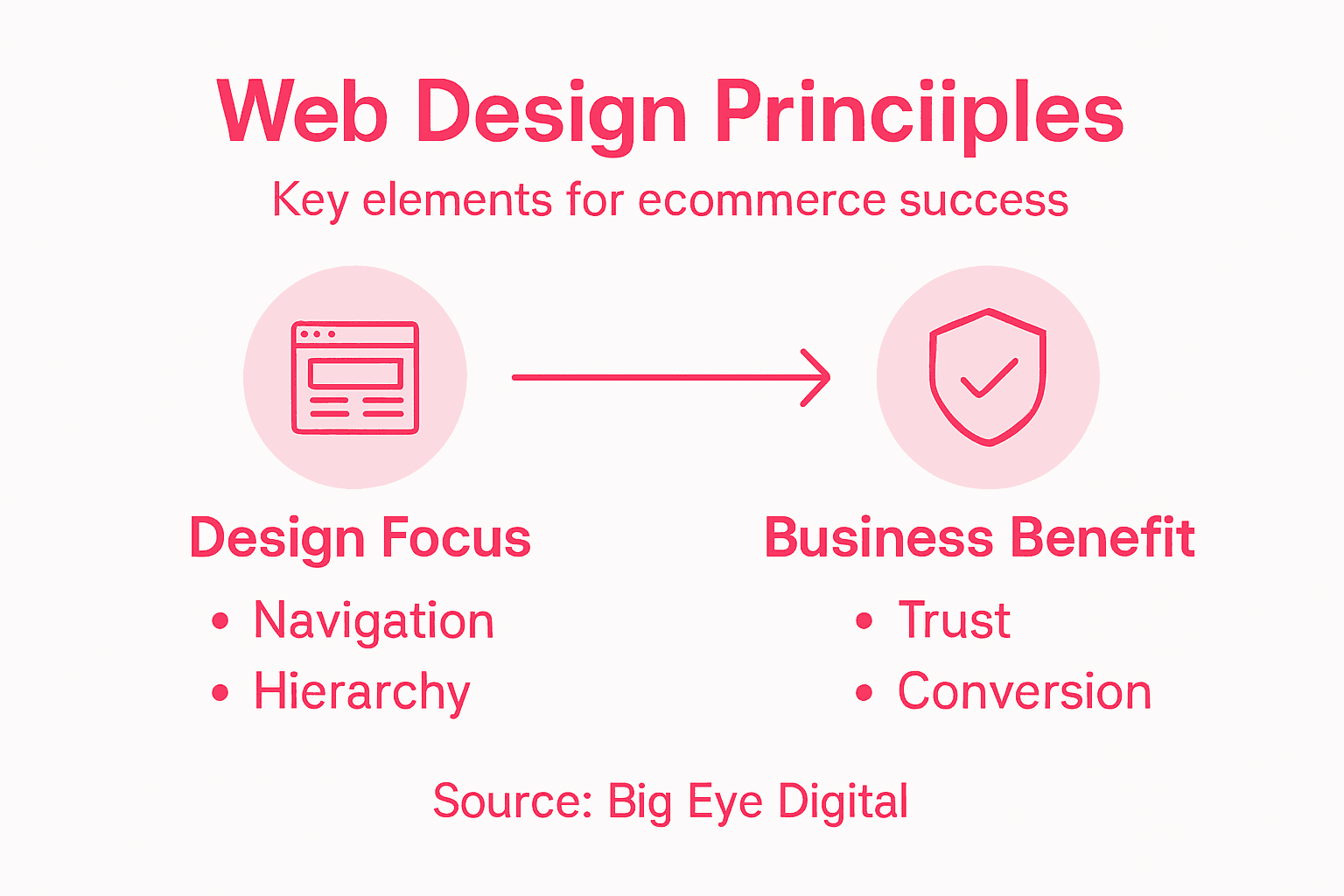
The following table summarises key pillars of professional web design and their direct business impact:
| Principle | Core Focus | Business Benefit |
|---|---|---|
| User-Centred Design | Intuitive site navigation | Increased engagement and retention |
| Visual Hierarchy | Structured content display | Improved message clarity |
| Responsive Functionality | Mobile and desktop consistency | Broader audience reach |
| Accessibility | Inclusive design choices | Expanded user base and trust |
| Technical Precision | Optimised site performance | Higher search rankings, conversions |
Pro tip: Conduct regular user testing and analyse website analytics to continuously refine and optimise your web design approach, ensuring your digital platform remains aligned with evolving user expectations and technological standards.
Types of ecommerce web design services
E-commerce web design services encompass a diverse range of specialised solutions tailored to different business models and digital selling strategies. Electronic commerce models demonstrate the complexity of digital retail environments, requiring nuanced design approaches for varied transaction types. These services extend beyond simple website creation to include comprehensive digital ecosystem development that supports specific business objectives.
The primary categories of e-commerce web design services include Business-to-Consumer (B2C) platforms, Business-to-Business (B2B) digital marketplaces, single-brand online stores, and multi-vendor marketplace designs. B2C services typically focus on creating engaging, user-friendly interfaces with streamlined purchasing processes, while B2B platforms require more complex functionality such as bulk ordering, custom pricing structures, and account management features. Single-brand stores demand unique brand storytelling and product presentation, whereas multi-vendor marketplaces need robust backend systems to manage multiple sellers and complex transactional workflows.
Technical specialisation becomes crucial in modern e-commerce web design. Services now incorporate advanced features like personalised recommendation engines, integrated customer relationship management (CRM) systems, responsive mobile design, and sophisticated payment gateway integrations. These technical elements transform websites from simple online catalogues into intelligent, adaptive digital sales platforms that can dynamically respond to user behaviours and market trends.
Pro tip: Select an e-commerce web design service that offers comprehensive technical support and ongoing platform maintenance, ensuring your digital infrastructure remains secure, performant, and aligned with evolving technological standards.
Impact of design on user experience and trust
Website design plays a critical role in establishing digital trust and shaping user perceptions of an online business. Website design elements significantly influence consumer confidence, with visual, informational, and navigational components acting as key trust signals for potential customers. The psychological impact of design extends far beyond aesthetic appeal, directly affecting user comfort, engagement, and purchasing decisions.

Different design elements resonate uniquely with various user demographics. Visual design communicates brand professionalism, colour psychology influences emotional responses, and intuitive navigation structures reduce cognitive friction during online interactions. Information design becomes particularly crucial, with clear, transparent presentation of product details, pricing, and company information building foundational user trust. Subtle design nuances like consistent typography, appropriate whitespace, and responsive layouts communicate reliability and attention to detail.
Technical aspects of design also profoundly impact user trust and experience. Security indicators, transparent contact information, clear return policies, and seamless mobile responsiveness signal a professional, customer-centric approach. Interactive elements like hover states, smooth transitions, and predictive search functionalities enhance user confidence by demonstrating technological sophistication and user-focused design thinking. Modern consumers rapidly assess website credibility through design quality, making every visual and interactive element a potential trust-building or trust-eroding factor.
Pro tip: Conduct regular user experience audits and gather feedback to continuously refine your website’s design, ensuring that each visual and interactive element actively contributes to building user trust and confidence.
Driving conversion rates and online sales
Successful e-commerce platforms require strategic approaches to transform website visitors into paying customers. Conversion rate strategies demonstrate that businesses must carefully choose between quality-focused and promotion-focused methodologies to maximise online sales potential. The nuanced art of conversion optimization involves understanding user behaviour, eliminating friction points, and creating compelling digital experiences that motivate purchasing decisions.
Psychological principles play a critical role in driving online sales performance. Consumers make purchasing decisions based on complex emotional and cognitive triggers, including social proof, perceived value, and ease of navigation. Strategic design elements like clear product descriptions, high-quality imagery, transparent pricing, and streamlined checkout processes directly impact conversion rates. User experience becomes paramount, with intuitive interfaces reducing decision-making complexity and building consumer confidence through professional, trustworthy design.
Technical optimization remains fundamental to conversion success. Website performance metrics such as loading speed, mobile responsiveness, and seamless cross-device functionality significantly influence user engagement and sales potential. Advanced conversion techniques include personalised product recommendations, targeted messaging, dynamic pricing strategies, and interactive elements that create a sense of urgency and exclusivity. By implementing data-driven design approaches that prioritise user needs and remove barriers to purchase, businesses can systematically improve their online sales performance.
Pro tip: Implement continuous A/B testing of design elements, checkout processes, and user journeys to incrementally improve conversion rates and identify the most effective strategies for your specific audience.
Ensuring security and compliance for brands
E-commerce businesses face increasingly complex legal and security challenges in the digital marketplace. Compliance with European consumer law requires rigorous adherence to regulatory frameworks that protect consumer rights and maintain digital marketplace integrity. Modern brands must develop comprehensive strategies that address both technical security measures and legal compliance requirements to build and maintain customer trust.
Security in e-commerce encompasses multiple critical domains, including data protection, payment system safety, and customer information management. Robust cybersecurity protocols involve implementing advanced encryption technologies, secure payment gateways, and comprehensive vulnerability management systems. Brands must also focus on continuous monitoring, regular security audits, and proactive threat detection mechanisms to protect against evolving digital risks. Compliance is not merely a technical checkbox but a fundamental aspect of building consumer confidence and maintaining organisational reputation.
Legal compliance extends beyond technical security measures to include transparent business practices, clear communication of terms and conditions, and comprehensive consumer protection mechanisms. This involves creating easily understandable contract terms, providing clear refund and return policies, and ensuring transparent pricing structures. E-commerce platforms must also navigate complex international regulations, understanding nuanced requirements across different jurisdictions and implementing flexible systems that can adapt to changing legal landscapes.
Pro tip: Invest in regular legal and security compliance training for your digital team, ensuring they remain updated on the latest regulatory changes and best practices in e-commerce protection.
Comparing DIY vs professional solutions
The choice between do-it-yourself (DIY) and professional web design represents a critical strategic decision for e-commerce businesses. While DIY platforms offer initial cost savings and apparent simplicity, professional web design delivers comprehensive solutions that address complex digital business requirements. Entrepreneurs must carefully evaluate the long-term implications of their website development approach, considering factors beyond immediate financial investment.
DIY solutions typically provide templated designs with limited customisation capabilities, potentially constraining brand differentiation and user experience. Professional web design offers bespoke solutions that align precisely with business objectives, incorporating advanced functionality, seamless user journeys, and sophisticated performance optimization. Key differences emerge in areas such as technical complexity, scalability, security implementations, and nuanced design elements that significantly impact conversion rates and user engagement.
Beyond aesthetic considerations, professional web design services provide strategic advantages through expert insights, ongoing technical support, and adaptive design methodologies. DIY platforms often lack comprehensive understanding of emerging digital trends, responsive design principles, and intricate user experience frameworks. Professional designers bring specialised knowledge of conversion rate optimization, accessibility standards, and integrated marketing strategies that transform websites from basic online catalogues into powerful digital sales platforms.
Below is a comparison of DIY versus professional web design approaches to support decision-making:
| Aspect | DIY Web Design | Professional Web Design |
|---|---|---|
| Customisation Level | Limited templates | Highly tailored solutions |
| Scalability | Often restricted | Easily scalable for growth |
| Long-term Maintenance | Typically self-managed | Ongoing expert support |
| Brand Differentiation | Generic visual identity | Unique, brand-aligned design |
| Conversion Potential | May miss optimisation | Expert-driven conversion focus |
| Technical Features | Basic functionalities | Advanced integrations and tools |
| Upfront Investment | Lower initial cost | Higher initial outlay |
| Hidden Costs | Redesigns, lost sales | Predictable long-term expenses |
Pro tip: Calculate the total cost of ownership for both DIY and professional solutions, considering not just initial development expenses but long-term maintenance, potential redesign costs, and potential lost revenue from suboptimal user experiences.
Unlock Ecommerce Success with Expert Professional Web Design
Struggling to find the right balance between stunning design and seamless user experience for your online store Is navigating technical complexities and compliance issues holding you back From user-centred design and responsive functionality to security and conversion optimisation a professional approach transforms challenges into growth opportunities. At Big Eye Deers we specialise in creating tailored ecommerce platforms that not only look exceptional but also perform flawlessly across devices and meet strict compliance standards. Our expertise spans Magento Open Source, Adobe Commerce, and Shopify builds including advanced B2B features and ERP integrations.
Experience first-hand how strategic design and technical precision drive engagement retention and sales. Visit Big Eye Deers now to explore how we bring UX, performance, and security together to build ecommerce solutions designed for long-term commercial success. Get in touch to start your journey towards a high-performing online store that puts your customers at the centre of every decision.
Frequently Asked Questions
What are the core principles of professional web design for e-commerce?
Professional web design for e-commerce centres around user-centred design, visual hierarchy, responsive functionality, accessibility, and technical precision, all of which contribute to improved user engagement, trust, and conversion rates.
How can professional web design improve my online sales?
Professional web design employs strategies like clear product presentations, intuitive navigation, and technical optimisation, all designed to enhance user experience and remove barriers to purchasing, ultimately driving higher conversion rates.
What is the difference between DIY web design and professional web design?
DIY web design typically offers limited templates and lower initial costs, while professional web design provides tailored solutions, advanced functionalities, and ongoing technical support, making it a more effective choice for optimising user experience and conversions in the long run.
Why is security and compliance important in e-commerce web design?
Security and compliance are crucial in e-commerce web design to protect customer data, maintain trust, and adhere to legal requirements. Implementing robust security measures and transparent business practices can significantly enhance user confidence and brand reputation.
Recommended



Adobe Commerce (Magento)
Formerly known as Magento, Adobe Commerce is built for complex catalogues, integrations, and long term growth. We design and develop stable, scalable stores that support demanding eCommerce requirements, including multi-store setups, complex pricing, and Hyva based performance improvements.

Bespoke Build
We design and build custom eCommerce platforms for businesses with complex workflows, integrations, or non standard requirements. Built from scratch around your business needs using Laravel and modern architectures.
Working with brands across the UK from our offices in Cardiff and Exeter, you deal directly with a senior team of designers and developers specialising in Shopify, Magento, WordPress and bespoke eCommerce platforms.
We focus on commercial outcomes. Better conversion rates, strong SEO foundations and eCommerce platforms that continue to improve long after launch.