Role of Web Design in Sales: Key Drivers for UK Ecommerce

Nearly 90 percent of online shoppers in the British market say the look and feel of a website shapes their trust in a brand from the first click. For ecommerce managers at mid-sized UK retail brands, every design decision has the power to turn browsers into buyers or send potential sales elsewhere. Discover which web design strategies drive conversions and why user experience is central to outperforming competitors in today’s United Kingdom ecommerce arena.
Table of Contents
- Defining Web Design’s Sales Contribution
- Essential Elements For High Conversion Rates
- User Experience Principles For Ecommerce Success
- Mobile Optimisation And Checkout Performance
- Building Trust With Security And Compliance
- Common Web Design Mistakes That Hurt Sales
Key Takeaways
| Point | Details |
|---|---|
| Web Design’s Role in Sales | Effective web design acts as a vital conversion tool, shaping customer perceptions and directly influencing purchasing behaviour. |
| Importance of User Experience | User experience must be seamless and intuitive, guiding customers toward purchases with minimal friction. |
| Mobile Optimisation is Critical | Responsive and adaptive web design is essential for catering to mobile users and enhancing conversion rates. |
| Building Trust Through Design | Professional design elements and transparency about security can significantly enhance customer trust and reduce transaction concerns. |
Defining Web Design’s Sales Contribution
Web design represents far more than aesthetic window dressing for online businesses. It serves as a critical conversion engine that directly influences customer purchasing decisions and overall sales performance. In the hyper-competitive United Kingdom ecommerce landscape, web design’s strategic impact determines whether potential customers engage or abandon their shopping journey within seconds.
Research indicates that website design quality dramatically shapes user perceptions and trust. First impressions are formed in milliseconds, with users evaluating visual appeal, navigational ease, and professional presentation almost instantaneously. A well-crafted digital storefront communicates brand credibility, signals product quality, and creates psychological comfort that transforms casual browsers into committed purchasers. Professional design elements like colour psychology, intuitive layouts, and responsive interfaces work cohesively to reduce friction and encourage transaction completion.
The sales contribution of web design extends beyond initial visual appeal. Sophisticated design integrates strategic elements that guide user behaviour and optimise conversion pathways. This includes implementing clear call-to-action buttons, streamlining checkout processes, ensuring mobile responsiveness, and creating visual hierarchies that subtly direct attention towards purchasing options. Such purposeful design interventions can significantly increase conversion rates by reducing cognitive load and making purchasing decisions feel effortless and intuitive.
Pro tip: Conduct periodic user experience audits to identify and eliminate design friction points that might be silently sabotaging your sales potential.
Here is a summary of web design elements and their direct impact on ecommerce sales:
| Design Element | Customer Perception | Sales Impact |
|---|---|---|
| Professional layout | Signals credibility | Increases conversion rates |
| Colour psychology | Creates emotional reassurance | Encourages purchase decisions |
| Intuitive navigation | Reduces confusion | Lowers abandonment rates |
| Responsive design | Satisfies mobile users | Expands sales opportunities |
| Trust badges and reviews | Boosts buyer confidence | Reduces transaction hesitation |
Essential Elements for High Conversion Rates
Successful ecommerce websites transform casual browsers into committed buyers through strategic design elements that reduce purchasing friction. User experience design factors play a pivotal role in creating digital environments that intuitively guide customers towards making purchases, with each design choice serving a specific psychological and functional purpose.
Key conversion-driving elements include navigation clarity, visual hierarchy, and streamlined interaction pathways. Websites must present information logically, with intuitive menu structures that enable effortless product discovery. Clear product categorisation, prominent search functionality, and concise filtering options help users quickly locate desired items. Visual design should employ colour psychology, strategic whitespace, and compelling imagery that builds emotional connection and product desirability. High-quality product photographs, detailed descriptions, and transparent pricing information build trust and reduce purchase hesitation.

Mobile responsiveness and page loading speed represent critical conversion determinants in modern digital commerce. With increasing smartphone shopping behaviours, websites must deliver seamless experiences across device types. This means implementing responsive design that adapts layout and functionality to different screen sizes, ensuring touch-friendly interfaces, and optimising image and script loading to maintain rapid performance. Checkout processes must be similarly streamlined, minimising form fields, offering multiple payment options, and providing clear progress indicators that reduce abandonment rates.
Pro tip: Implement A/B testing on key conversion elements like call-to-action buttons, product page layouts, and checkout flows to continuously refine your website’s performance.
User Experience Principles for Ecommerce Success
User experience represents the critical foundation upon which successful online retail strategies are built, transforming digital interactions into meaningful customer journeys. Core UX principles focus on creating seamless, intuitive pathways that guide customers effortlessly from initial product discovery to final purchase completion.
Effective user experience design demands a holistic approach that addresses multiple interconnected elements. Navigation must be supremely intuitive, with clear menu structures, logical product categorisation, and robust search functionality that enables rapid information retrieval. Visual design plays an equally crucial role, balancing aesthetic appeal with functional clarity. This means employing strategic colour palettes, consistent typography, and visual hierarchies that subtly direct user attention towards key purchasing elements. Importantly, every design choice should reduce cognitive load, making the shopping experience feel natural and frictionless.
Responsive design emerges as a non-negotiable principle in modern ecommerce user experience. With mobile shopping becoming increasingly prevalent, websites must deliver consistent, high-quality experiences across diverse device types and screen sizes. This encompasses more than mere visual adaptability – it involves creating touch-friendly interfaces, optimising image and content loading speeds, and ensuring that interactive elements remain accessible and functional regardless of device characteristics. Performance metrics like page load time directly correlate with user satisfaction and conversion potential, underscoring the technical dimensions of superior user experience design.
Pro tip: Conduct regular user testing and analyse heatmap data to identify and eliminate potential friction points in your website’s user journey.
Mobile Optimisation and Checkout Performance
Mobile commerce has transformed the digital shopping landscape, making responsive design and seamless checkout experiences paramount for UK ecommerce success. Mobile optimization strategies are no longer optional but essential for businesses seeking to capture and retain mobile-first consumers.
Effective mobile design requires a comprehensive approach that goes beyond simple screen resizing. Websites must create truly adaptive experiences that consider touch interactions, reduced screen real estate, and varying mobile network conditions. This means implementing touch-friendly buttons with generous tap targets, streamlining navigation menus, and ensuring that product images and descriptions are legible and accessible on smaller screens. Performance becomes critical, with page load times directly influencing user patience and conversion potential. Compressed images, minimised scripts, and efficient caching strategies can significantly improve mobile site responsiveness.
Checkout performance represents the critical conversion point where mobile design excellence truly matters. Successful mobile checkout processes eliminate unnecessary friction by minimising form fields, offering multiple payment options, and providing clear, concise progress indicators. Integrating digital wallets, enabling guest checkout, and implementing autofill capabilities can dramatically reduce abandonment rates. Security signals such as SSL certificates and trust badges become even more important on mobile platforms, where users may feel more vulnerable to potential transaction risks.
Pro tip: Conduct monthly mobile performance audits using tools that simulate real-world device and network conditions to continuously optimise your mobile shopping experience.
Building Trust with Security and Compliance
Customer trust represents the foundational currency of successful online retail, with website design playing a pivotal role in establishing credibility and security perceptions. E-commerce trust indicators go far beyond simple aesthetic choices, encompassing strategic design elements that communicate professionalism, reliability, and commitment to customer protection.
Visual design elements serve as critical trust signals for online shoppers. Professional layouts featuring clean, consistent typography, high-resolution product imagery, and intuitive navigation communicate organisational competence. Transparent policies displayed prominently about returns, shipping, and data protection demonstrate integrity. Security badges, SSL certificate indicators, and recognisable payment gateway logos strategically positioned throughout the checkout process help neutralise customer anxieties. Displaying real customer reviews, testimonials, and trust seals further validates the website’s authenticity and reduces perceived transactional risk.
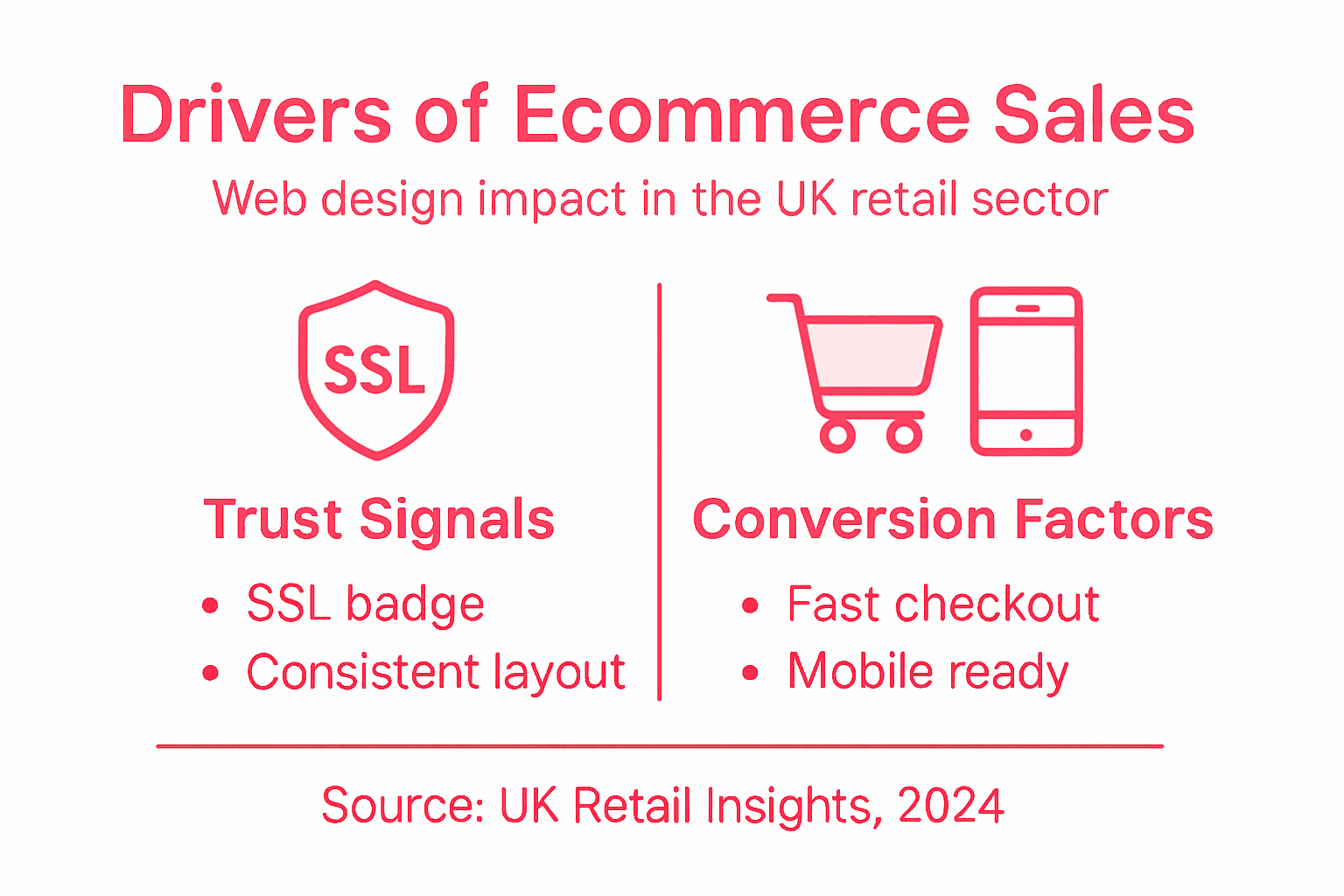
Legal compliance forms another essential dimension of building digital trust. United Kingdom regulations like General Data Protection Regulation (GDPR) mandate explicit user consent mechanisms, transparent data handling practices, and clear privacy communications. Websites must implement robust security protocols that protect customer information, including secure payment gateways, encrypted data transmission, and comprehensive cyber security measures. Effective design integration of these compliance requirements involves creating user-friendly consent forms, easy-to-understand privacy policies, and secure authentication processes that feel seamless rather than intrusive.
Pro tip: Conduct quarterly security and compliance design audits to ensure your website’s trust signals remain current and effectively communicate your commitment to customer protection.
Common Web Design Mistakes That Hurt Sales
E-commerce websites inadvertently sabotage their sales potential through seemingly minor design oversights that accumulate into significant user friction. Web design pitfalls represent critical barriers that transform potential customers into frustrated abandoners, making strategic design evaluation essential for sustained online retail success.
Cluttered and confusing page layouts stand as a primary conversion killer. Websites that overwhelm users with excessive information, competing visual elements, and non-intuitive navigation create cognitive overload. This means poorly structured product grids, inconsistent colour schemes, and chaotic menu systems that obscure key purchasing pathways. Complex filtering mechanisms, small unreadable product images, and absence of clear categorisation further diminish user experience. The most effective designs employ strategic visual hierarchies, ample whitespace, and focused content presentation that guides users effortlessly towards purchasing decisions.
Technical performance represents another crucial dimension where design mistakes dramatically impact sales potential. Slow loading times, non-responsive mobile designs, and broken interactive elements create immediate user distrust. Websites must prioritise rapid page rendering, seamless cross-device functionality, and smooth checkout processes. This involves optimising image sizes, implementing efficient caching strategies, ensuring touch-friendly interfaces, and minimising unnecessary script loading. Critically, these technical design elements are not mere backend concerns but fundamental user experience components that directly influence purchasing behaviour.
Pro tip: Conduct monthly user experience audits using heatmap and session recording tools to identify and systematically eliminate design friction points.
The following table compares common web design pitfalls with recommended solutions to optimise sales:
| Common Mistake | Problem Caused | Effective Solution |
|---|---|---|
| Cluttered layouts | Cognitive overload | Use ample whitespace |
| Slow page loading | User frustration | Optimise image and script sizes |
| Poor mobile responsiveness | Lost mobile sales | Implement adaptive design |
| Confusing navigation | Abandonment before checkout | Simplify menu and categorisation |
Unlock Your Ecommerce Growth with Strategic Web Design
The article highlights critical challenges faced by UK online retailers including poor mobile responsiveness, cluttered layouts, and slow checkout processes that drive customers away before completing purchases. To transform these pain points into opportunities, you need a web design partner who understands the power of user experience, conversion optimisation, and security compliance. Big Eye Deers specialises in building Magento and Shopify stores tailored to your unique requirements, ensuring every design element—from intuitive navigation to mobile optimisation—works to boost sales and build customer trust.
Don’t let friction points silently sabotage your ecommerce success. Explore how our 17 years of experience and holistic approach to UX, performance, and ongoing support can elevate your online store. See our full range of solutions at Big Eye Deers and discover why savvy UK retailers trust us to deliver secure, high-performing stores that convert visitors into loyal buyers. Take the next step today to future-proof your ecommerce platform with expert design and development at https://bigeyedeers.co.uk.
Frequently Asked Questions
What role does web design play in influencing sales for ecommerce businesses?
Web design serves as a critical conversion engine that affects customer purchasing decisions by enhancing user trust and engagement through professional presentation, intuitive navigation, and modern aesthetics.
How can colour psychology improve conversion rates on an ecommerce website?
Utilising colour psychology can create emotional reassurance, informing customer feelings and influencing their purchasing decisions by aligning colour choices with brand messaging and product appeal.
What are some common web design mistakes that can hurt sales?
Common mistakes include cluttered layouts that overwhelm users, slow page load times that frustrate visitors, and poor mobile responsiveness that leads to lost sales opportunities. Streamlining design can mitigate these issues.
Why is mobile optimisation essential for ecommerce sites?
Mobile optimisation is crucial because an increasing number of customers shop using their mobile devices. Responsive design ensures that websites function seamlessly on various screen sizes, providing a smooth shopping experience that enhances conversion rates.
Recommended


Adobe Commerce (Magento)
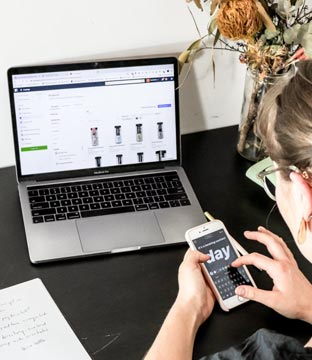
Formerly known as Magento, Adobe Commerce is built for complex catalogues, integrations, and long term growth. We design and develop stable, scalable stores that support demanding eCommerce requirements, including multi-store setups, complex pricing, and Hyva based performance improvements.

Bespoke Build
We design and build custom eCommerce platforms for businesses with complex workflows, integrations, or non standard requirements. Built from scratch around your business needs using Laravel and modern architectures.
Working with brands across the UK from our offices in Cardiff and Exeter, you deal directly with a senior team of designers and developers specialising in Shopify, Magento, WordPress and bespoke eCommerce platforms.
We focus on commercial outcomes. Better conversion rates, strong SEO foundations and eCommerce platforms that continue to improve long after launch.